How to Write SEO Content That Doesn't Sound Robotic
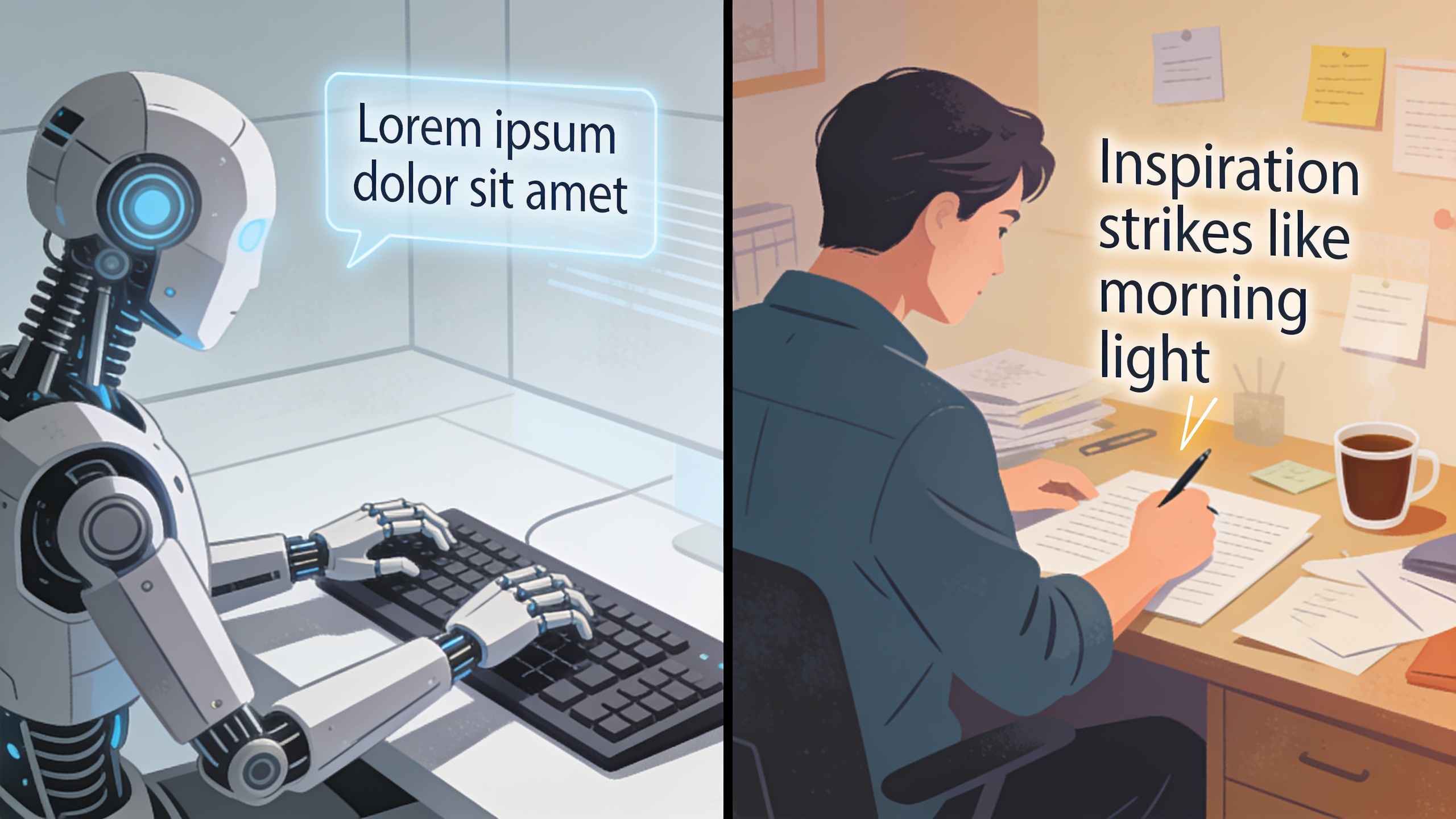
So this guide covers why AI content sounds robotic, what to actually fix at the sentence and structure level, and how to build a system so every article sounds like you instead of a language model, whether you wrote it by hand or generated it.
Table of Contents
- What Makes AI Content Sound Robotic in the First Place?
- The Core Principles of Natural Sounding AI Content
- How Do You Develop an SEO Writing Style That Still Sounds Human?
- Sentence-Level Techniques to De-Robotify Your Draft
- Structuring Content So It Reads Naturally While Still Ranking
- Robotic Pattern vs. Natural Fix: An Editing Checklist
- Will Editors and AI Detectors Notice the Difference?
- Keeping Your Content Natural at Scale
- FAQ
What Makes AI Content Sound Robotic in the First Place?
AI content sounds robotic when it leans on predictable sentence patterns, generic transitions, and keyword repetition instead of having an actual opinion. Language models are built to spit out statistically likely word sequences, and that produces prose that's smooth but completely interchangeable. The kind of writing that could describe any product, in any industry, without ever saying anything you'd remember.
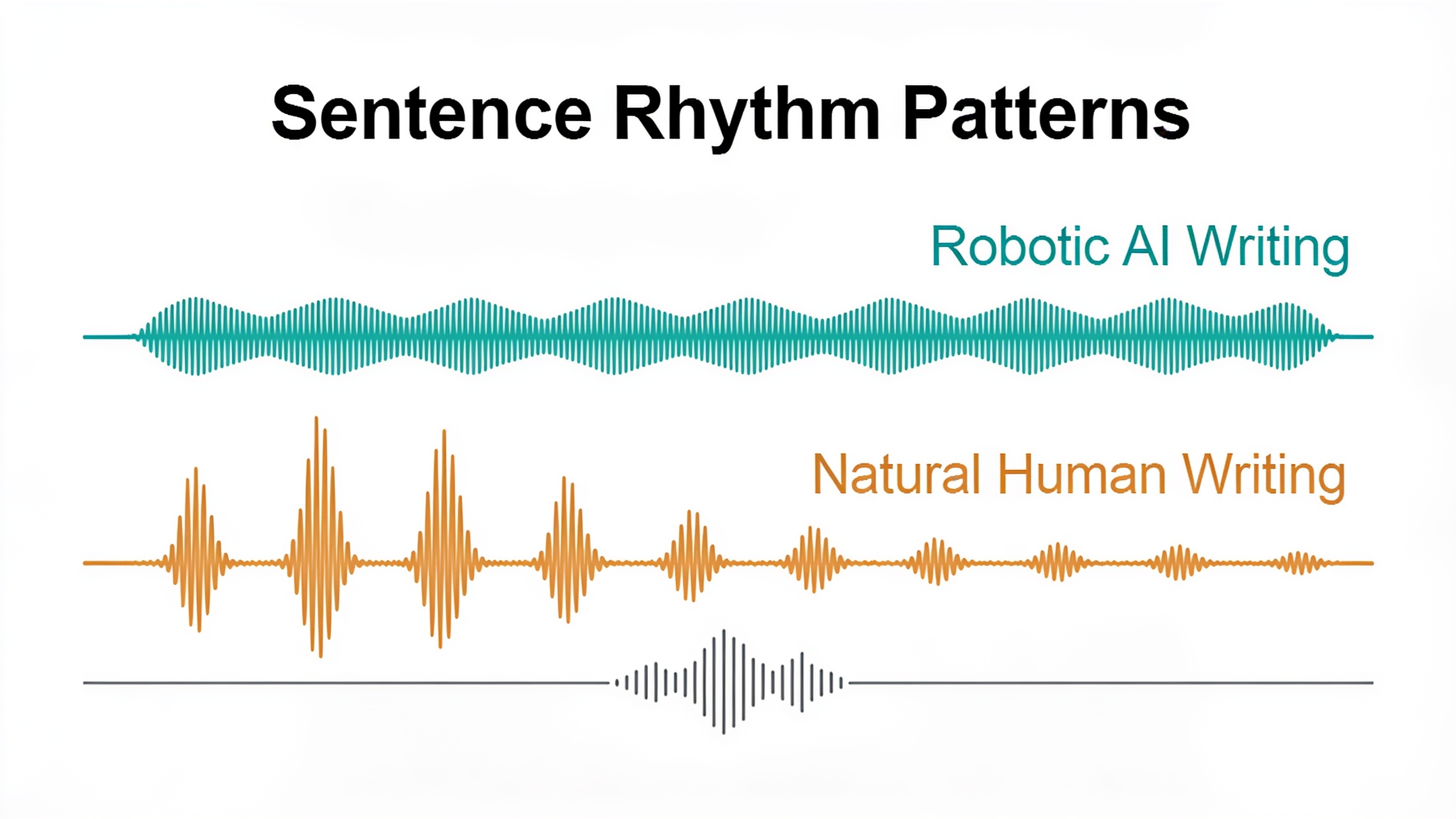
There are a handful of tells that show up over and over in unedited drafts. Every section starts with some throat-clearing nonsense like "In today's fast-paced digital world." Words like "moreover," "furthermore," and "in conclusion" pop up constantly even when nothing's being added or concluded. Paragraphs say the same thing three slightly different ways just to hit a word count. Claims stay fuzzy ("many businesses see great results") instead of naming a number, a person, or a real situation. And every sentence is roughly the same length, which gives the whole thing this flat, sing-song rhythm the second you read it out loud.
None of that means AI writing is doomed for SEO. It just means unedited AI writing is generic, and generic struggles with both readers and search engines. Google's rewarding content that shows real first-hand expertise and specificity more and more. So the fix isn't to swear off the tools. It's to treat the AI draft as raw clay, not a finished pot.
The Core Principles of Natural Sounding AI Content
Natural-sounding AI content comes down to three things: it has a specific point of view, it varies its rhythm, and it reads like the writer has actually done the thing they're describing. Nail those three and most of the robotic quality just evaporates, no matter which tool produced the first draft.
It Has a Point of View
Generic content hedges. Natural content picks a side. Something like "we'd recommend X for teams under 10 people, but honestly not for enterprise workflows" only comes from someone who's been in the weeds. Not from an averaged-out summary of everything already floating around online. When you're editing an AI draft, hunt for every sentence that would still make sense if you swapped your brand name for a competitor's. Then rewrite those until they only work for your product, your audience, your data.
It Varies Its Rhythm
Real writing bounces between short punchy sentences and longer, wandering ones. AI defaults to this steady medium cadence that never changes. Reading a paragraph out loud is still the fastest way to catch it. If every sentence takes about the same breath to say, the rhythm needs breaking up.
It Sounds Like Someone Who Has Done the Thing
The single biggest signal of human writing is specificity. A named tool. An exact percentage. A dated study. A real customer mess. A mistake the writer actually made and is a little embarrassed about. Readers and search engines both light up at concrete detail like this, because pattern-matching can't fake it. It needs an actual person (or real data) behind the words.
How Do You Develop an SEO Writing Style That Still Sounds Human?
You build an SEO writing style that sounds human by treating keywords as topics to cover well, not phrases to jam in repeatedly, and by writing for one specific reader instead of a vague "everyone." Search engines have gotten a lot smarter about meaning and intent, so keyword stuffing isn't just annoying to read anymore. It's an outdated move that can actually hurt you by making the page look low-quality or manipulative.
Here's the shift that matters. Instead of asking "how many times do I need this keyword," ask "what would someone searching this actually want to know, and did I answer it clearly?" When your style is working, a few things happen naturally. The primary keyword and its variations land where a human would really put them, in the title, the intro, a couple of subheadings, not crammed into every paragraph. Related terms and synonyms show up on their own because you covered the topic properly. Each section answers a real question phrased the way people actually talk. And the whole thing still sounds like your brand, whether that's playful or technical or bone-dry.
This is also where brand voice guidelines actually earn their keep. Give a writer (human or AI) three to five adjectives for how you should sound, say "direct, a little dry, allergic to buzzwords," and you'll catch way fewer robotic passages than if you just ask for "a blog post about X." I've seen this difference firsthand and it's not subtle.
Sentence-Level Techniques to De-Robotify Your Draft
The fastest way to fix robotic content is at the sentence level, because that's where the AI patterns are most obvious and easiest to kill in a single pass. Here are five moves that turn an average draft into something that reads like a person cared.
Cut the throat-clearing. Delete openers like "In this article, we will explore" or "It's important to note that." Just start with the actual point.
Swap vague intensifiers for numbers. "Significantly increased traffic" becomes "increased traffic by 34% in three months." And if you don't have a real number? Say so. Vague-but-honest beats specific-but-made-up every single time. Don't invent data. Please.
Kill the repetitive transitions. If "additionally," "furthermore," and "moreover" show up more than once or twice, at least half of them can just go with zero loss of meaning.
Use contractions where your voice allows it. "It's" not "it is," "you'll" not "you will." Tiny choices, but they make writing sound spoken instead of assembled.
And this last one matters most: add one sentence per section that only you could've written. A specific anecdote, a client story, an opinion that cuts against the usual advice. Honestly, this single habit fixes robotic tone better than any amount of word-swapping.
Structuring Content So It Reads Naturally While Still Ranking
Structure affects both readability and search performance, and the two goals fight each other way less than people assume. Search engines like content that's well-organized with clear headings because it's easier to parse and match to intent. Readers like the exact same thing because it's easier to skim. Everybody wins.
The trick is making structure feel like organization, not a formula. A few habits do most of the work. Write headings as real questions or clear statements, not keyword fragments. "How Much Does X Cost" reads naturally and matches how people search; "X Pricing Cost Factors Guide" reads like a keyword threw up. Vary your paragraph length on purpose. A one-sentence paragraph after three chunky ones creates emphasis. It mimics how people actually write when they mean something. Use bullets only when the content is genuinely list-like, real steps or options or comparisons, because overusing bullets to break up prose is its own AI tell (it dodges the harder work of writing connected sentences). And front-load the answer in each section, then explain the why. That's how featured snippets and AI answer boxes pull content, so it helps human skimmers and generative search tools quote you correctly.
Want content like this running on autopilot for your own site? Try RobinRank free — AI-written, SEO-optimized articles generated and published automatically, no credit card required.
Oh, and if you're pumping out a lot of content and you ever end up restructuring or moving your site, it's worth thinking about how all that structure survives a technical change. The SEO migration checklist for moving sites without losing rankings covers how to keep the SEO value of well-built pages when your URLs, templates, or hosting shift around.
Robotic Pattern vs. Natural Fix: An Editing Checklist
Below are the most common robotic patterns you'll find in unedited AI drafts, each with the specific fix to apply while editing. Keep a version of this next to your draft and "make it sound less robotic" turns from a vague wish into a concrete pass you can actually run.

| Robotic Pattern | Why It Sounds Fake | Natural Fix |
|---|---|---|
| "In today's digital landscape..." opener | Generic filler that adds no information | Open with the direct answer or a specific fact |
| Repeated "moreover / furthermore / additionally" | Overused transitions signal formulaic writing | Delete most of them; use "and," "but," or nothing at all |
| Vague claims ("many companies see results") | No verifiable detail, sounds evasive | Add a real number, name, or timeframe — or admit it's not measured |
| Uniform sentence length | Creates a flat, monotone rhythm | Mix short and long sentences deliberately |
| Every section ends with a summary restating the heading | Redundant, padding for word count | End sections with a takeaway, next step, or example instead |
| Heavy bullet-point overuse in place of prose | Avoids writing connected reasoning | Use bullets only for true lists; explain reasoning in full sentences |
| No opinion or recommendation anywhere | Reads like a neutral aggregation, not expertise | State a clear recommendation, even a conditional one |
| Keyword repeated unnaturally in every paragraph | Reads like it's written for a crawler, not a person | Use the keyword where natural, rely on related terms elsewhere |
Will Editors and AI Detectors Notice the Difference?
An editor will almost always spot robotic patterns before any detector flags a thing, because all those tells I listed are visible to a careful reader with no special software at all. AI detection tools are a separate, messier question. They analyze statistical patterns in text, and their accuracy and reliability are all over the map, which is a nuance worth sitting with before you assume a detector score tells you anything real about quality or rankings.
This matters for SEO teams because search engines have flat-out said they judge content on quality and helpfulness, not on how it was produced. That said, plenty of publishers and clients still run everything through detection tools as a gate, so it pays to understand how those tools actually work and where they fall apart before you build your whole process around them. If you want to go deeper on this exact thing, Will AI Content Detection Flag Your SEO Content? What to Know walks through what these detectors can and can't reliably tell you.
The practical takeaway is kind of elegant, actually. Editing for genuine specificity and a real point of view, the same work that makes content sound human, is also the most reliable way to cut down the statistical patterns detectors tend to flag. You're solving for readability, and the same pass quietly solves for detection risk too. No need for two separate processes.
Keeping Your Content Natural at Scale
Holding onto a natural, on-brand voice gets harder the more you publish, and that's exactly the problem structured voice guidelines and consistent workflows exist to solve. One well-edited article by hand? Easy. Fifty a month, published steadily, none of them sounding like they rolled off an assembly line? That needs a repeatable system, not one heroic editor pulling all-nighters.
A few things make that system actually work. You want a written voice guide with real example sentences, the "we'd say it like this, not like that" kind, so anyone editing a draft has a reference point. You want a standing checklist (that table up there works fine) applied to every draft before it ships, not just the ones that feel obviously off. Regular read-alouds help too, since rhythm problems are so much easier to hear than to see. And someone needs to own the "does this sound like us" question. Even in an automated pipeline, one person should be accountable for voice, not just for hitting publish dates.
This is basically the problem RobinRank is built for on the content side. An AI-powered SEO platform that automatically writes, optimizes, and publishes articles is only worth anything if the output actually sounds like the business it's representing, which is why voice consistency and editorial quality matter every bit as much as raw publishing speed. Pair that kind of automation with the habits in this article, specificity, rhythm, a real point of view, and that's the line between content that scales in volume and content that scales in quality.
FAQ
Does AI-generated content rank worse than human-written content?
Search engines have said publicly they judge content on quality and helpfulness, not on how it was made. In practice, unedited generic AI drafts underperform, but not because they're AI. It's because they lack the specificity, structure, and point of view that readers and ranking systems both respond to. Well-edited AI-assisted content that clears those bars performs the same as well-edited human content.
How can I tell if my content sounds robotic before I publish it?
Read it out loud. Seriously. Robotic writing gives itself away through flat rhythm, repeated transitions, and sentences that could describe any brand in your industry. Here's my quick test: if you can swap your company name for a competitor's and not a single sentence changes meaning, it's not specific enough yet.
Should I avoid AI writing tools entirely to protect my SEO writing style?
No. The tool isn't the risk, the missing editing is. AI is great for drafting structure, building an outline, or banging out a quick first pass. The natural, on-brand quality comes afterward, in the edit: adding real examples, varying rhythm, applying a consistent voice guide.
How many keywords should I include to maintain good SEO without sounding forced?
There's no magic number that works for every page, and anyone who gives you one is guessing. A better approach is to cover the topic thoroughly enough that the primary keyword and its variations land where a human would genuinely use them, the title, the intro, a few subheadings, while related terms show up on their own because you actually explained the whole subject.
Do AI content detectors actually catch AI-written SEO articles?
Detection tools analyze statistical text patterns and their accuracy varies a lot, so a flag isn't a reliable stand-in for quality or search performance. The more useful question for an editorial team is whether the content is specific, accurate, and genuinely helpful, the same qualities that also happen to reduce detectable AI patterns in the first place.
Writing SEO content that doesn't sound robotic isn't about picking the perfect tool or dodging AI entirely. It's about treating every draft, however it got made, as a starting point that still needs a real point of view, a varied rhythm, and specific proof behind its claims. Build that editing habit into your process once and it scales with you, whether you're writing five articles a month or fifty.
Ready to stop writing content by hand? Start your free RobinRank trial and get a full month of SEO-optimized articles published on autopilot.